
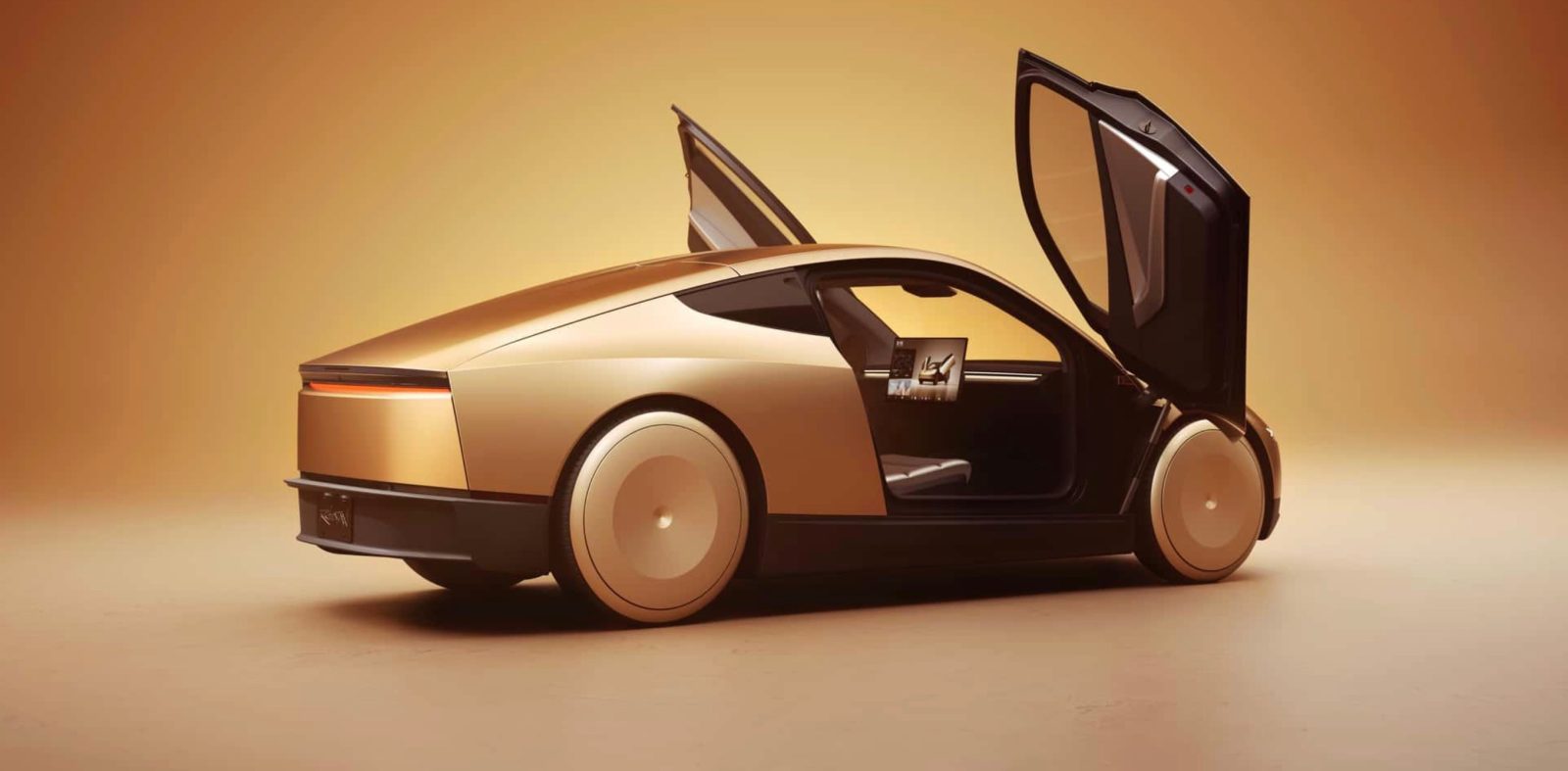
Tesla is ramping up production of the Cybercab at Giga Texas, with more than 100 of the steering-wheel-less two-seaters already spotted in the factory’s outbound lots.
The problem is that Tesla can’t sell it to you, and it can’t yet drive itself without a human watching — which raises the obvious question of why Tesla is building the car at all right now.
A car with no steering wheel, and nowhere to go
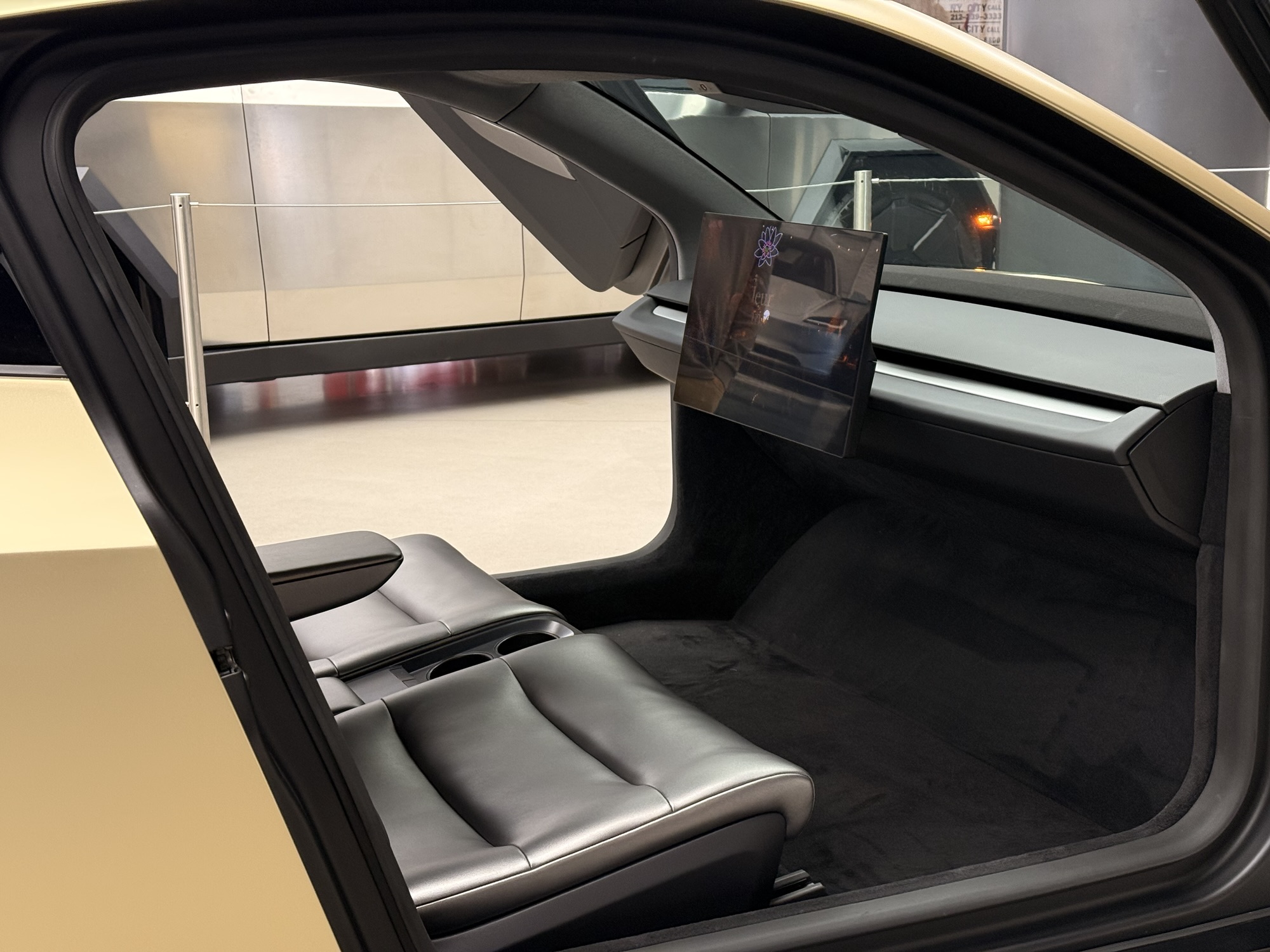
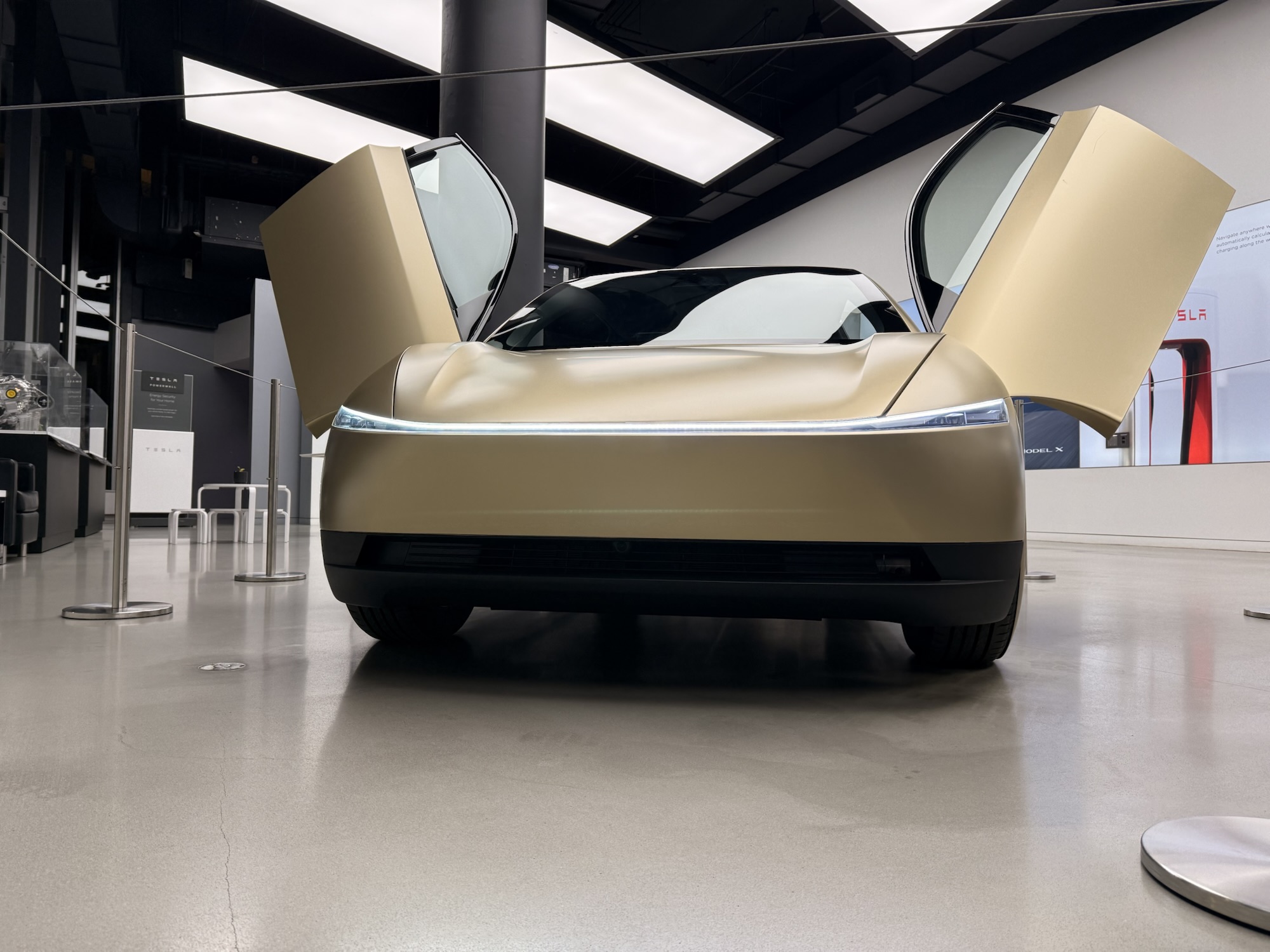
The Cybercab has no steering wheel and no pedals. That’s the entire point of the design — it’s built to be a robotaxi, not a personal car. Tesla rolled the first steering-wheel-less unit off the line in February, and confirmed continuous production had started on its Q1 2026 earnings call in April.
Musk has described the ramp as a “stretched out S-curve” — slow now, “going kind of exponential towards the end of the year.” Tesla has designed the Cybercab to self-certify against all Federal Motor Vehicle Safety Standards, which lets it sidestep NHTSA’s 2,500-unit annual cap on exemption vehicles and scale without a regulatory ceiling.
So the manufacturing is happening. What isn’t happening is the one thing that would make a steering-wheel-less car useful: unsupervised autonomy at scale.
The bottleneck was never the factory
Tesla is very good at building cars and ramping up production. It is not, so far, good at making them drive themselves at scale without a person in the seat.
A year after launching Robotaxi in Austin, the service is still tiny. City officials peg Tesla’s Austin fleet at roughly 50 vehicles, and the genuinely driverless portion is far smaller — Electrek’s tracking shows the unsupervised fleet has been shrinking rather than growing, sliding from a peak of about 25 cumulative cars toward roughly 14 active ones.
Tesla expanded the Austin map to cover the entire metro, but with only about 20 cars running, the bigger box didn’t help riders. It has since drawn the same kind of small geofence in Dallas and Houston, and most recently mapped a sliver of Miami — its first market outside Texas.
The reason the fleet stays small isn’t a mapping problem, and Musk has said so himself. On the Q1 2026 call, he told investors that safety validation is the limiting factor for Robotaxi expansion and that Tesla is holding back until a rewritten FSD v15 arrives — now targeted for the end of 2026 or early 2027. Tesla’s supervised fleet has been crashing at roughly four times the rate of an average human driver, and the company has reported a string of crashes to NHTSA in Austin.
Musk also conceded on the same call that Robotaxi “likely will not see material revenue until at least 2027.”
Building Cybercabs doesn’t move the needle on the hard part
Here’s the part that gets lost in the production headlines: every Cybercab Tesla builds does nothing to solve the software problem that’s actually holding the whole program back.
The bottleneck is FSD. Tesla’s own admission is that it needs a ground-up rewrite before it can scale, and no amount of hardware coming off the line in Austin changes that. The Cybercabs will sit and wait for the software, the same way Tesla’s existing robotaxi fleet is capped by safety, not by a shortage of cars.
You could argue the hardware matters too. Tesla has bet the entire program on cameras only, no radar or lidar. I’m not convinced radar and lidar are strictly required for Level 4 autonomy — but the companies actually running driverless cars at scale use them, and Tesla’s current Robotaxi deployment, a year into the program, isn’t exactly a ringing endorsement of the vision-only approach. Either way, the constraint lives in the sensing and the software stack, not on the assembly line.
Which means the Cybercab isn’t going to reach consumers any time soon. There’s no scenario where Tesla sells a car with no steering wheel to a private buyer before it can operate that car without a safety monitor in its own geofenced service. Realistically, the Cybercab’s near-term home is exactly the small robotaxi zones Tesla has drawn in Austin, Houston, Dallas, and now Miami — and nowhere else.
We’ve watched Tesla get ahead of itself before
There’s a smaller, dumber version of this same pattern that Tesla already lived through: the turn signal stalk.
Tesla deleted the stalk from the Model 3 in the name of a cleaner, button-driven, autonomy-first interior — a car so forward-looking it didn’t need old-fashioned controls. Drivers hated it, safety raters dinged it, and Tesla’s own VP of engineering, Lars Moravy, eventually admitted the company “deleted too much.” Tesla brought the stalk back and now sells a $595 retrofit for a problem it created.
The Cybercab is the same instinct at a vastly larger scale and cost. Tesla removed the steering wheel because it assumed the autonomy would be solved by the time the car mattered. It wasn’t.
Electrek’s Take
I get a lot of questions about the Cybercab, and they usually boil down to the same confusion: why is Tesla ramping production of a car with no steering wheel when it clearly hasn’t solved autonomy at scale?
Top comment by Upstate Dave
Tesla needs to put a steering wheel in the cybercab. There is a huge market for a short term rental / cab that will drive itself to your location, let you ride OR drive for a fee, then drive itself away when you are done with it. I would use that over an Uber at the same cost. I would also use that over a day rental from enterprise or whatever for the same cost.
The answer is that Tesla is doing what it always does — it builds the hardware around a future it’s certain is coming, then finds out the future is harder than it thought. The Cybercab is a manufacturing achievement attached to a software promise that keeps slipping. Every unit rolling off the Giga Texas line is a bet that FSD v15 will finally work, and Tesla has been making versions of that bet since 2016.
To be clear about what this car will and won’t do: it won’t be sold to consumers in the foreseeable future, and it won’t help Tesla improve its Robotaxi service either. It’s not a data-collection tool — the fleet Tesla already has is more than enough to expose the software’s limits. The Cybercab only becomes useful the day the software is good enough to run it unsupervised at scale and outside small geo-fenced areas, and on that day the specific car matters a lot less than the FSD build inside it. Until then, Tesla is stockpiling steering-wheel-less inventory for a service it admits it can’t yet scale on safety grounds.
Now, for Tesla’s sake, let’s hope FSD v15 is the silver bullet, but we heard that so many times from Tesla before, and despite the great improvements in v14, I doubt it will be enough for Tesla to finally take responsibility for its autonomous driving features and let owners use them unsupervised.
If you’re a Tesla owner, powering your EV with home solar is one of the smartest ways to lock in low fuel costs. With electricity rates climbing nearly 10% last year, home solar protects you against future rate increases. And with lease and PPA options, you can go solar with zero upfront cost and start saving immediately. If you want to find the best deal, check out EnergySage. It’s a free service with hundreds of pre-vetted installers competing for your business, so you save 20 to 30% compared to going it alone. No sales calls until you pick an installer. Get your free quotes here.


FTC: We use income earning auto affiliate links. More.



Comments